
Artifact Collecting

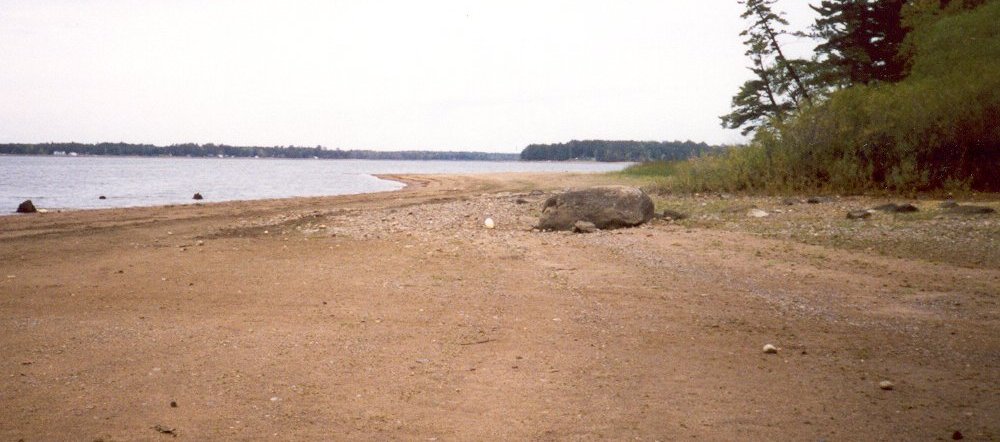
Finding Old Copper Complex artifacts is a time consuming endeavor. Through 40 years of collecting we have searched woods, plowed fields, river banks, reservoirs and lake beaches, and dry ancient lake and river banks. No matter where we have successfully hunted, the common denominator has always been water, every site where we found copper artifacts has been near water presently or in the ancient past. This should not be surprising since networks of rivers and lakes have always been the highway system for ancient peoples, as well as a food source.
In order to successfully locate the lakes and rivers as they were in the period of the Old Copper Complex you need U.S. Geological Survey topographic maps. Careful study can show you the location of river courses before they were dammed for hydro-electric power generation and flood control purposes. Many of the Old Copper Complex sites we have worked are only exposed when the water level of rivers and reservoirs are lowered in the fall of the year to accomodate snow melt run-off in the spring or during periods of little or no rain when water levels fall. Topographic maps can also show you where water was thousands od years ago, along with peninsulas and islands.
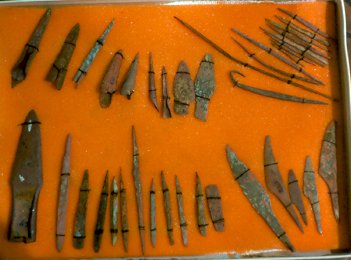
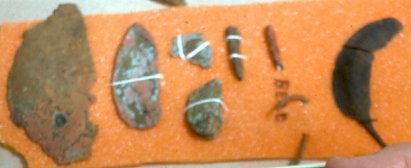
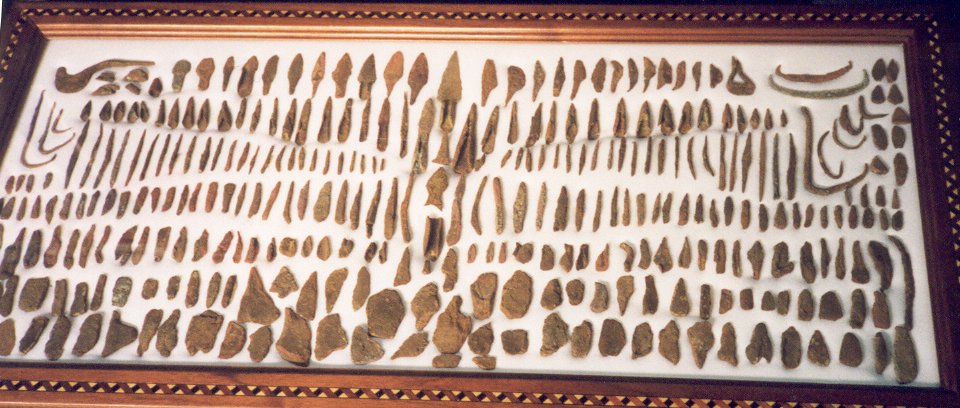
Armed with your topo map, round point shovel, garden trowel, rubber knee boots and metal detector you can now head to the field. Without this last item, a metal detector, you are going to do a monumental amount of digging and come up, almost assuredly, empty-handed. We use 6 different metal detectors in our artifact hunting. What you will quickly find is that without a good metal detector you will become frustrated in your search. By way of example you will see pictured below 3 groups of artifacts displayed on an orange background, these were found over a period of almost 20 years by a husband and wife with a summer cottage on a reservoir in northern Wisconsin who walked the lake shore for exercise whenever the water was low. These artifacts were all found without the use of a metal detector, but remember, it took almost 20 years to find them. On the other hand, the artifacts displayed in the case below were all found at a single site in one collecting season with the use of metal detectors, quite a difference.
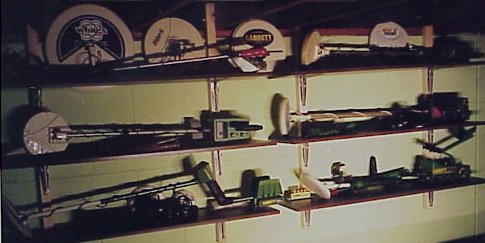
Our metal detectors with a variety of different heads for various conditions.
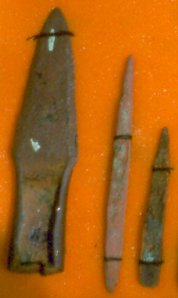
Notice the 3 spots of native silver on this socketed point.
Copper artifacts found over a period of almost 20 years without the aid of a metal detector.
More artifacts found without a metal detector.
Copper artifacts found at a single site with the use of metal detectors by my father, Dr. E.W. Johnson.
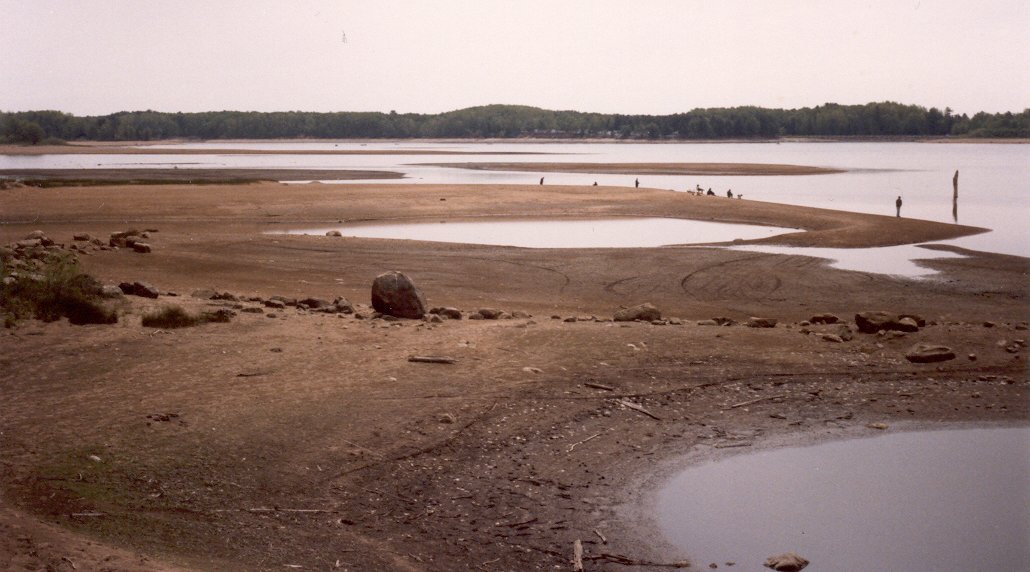
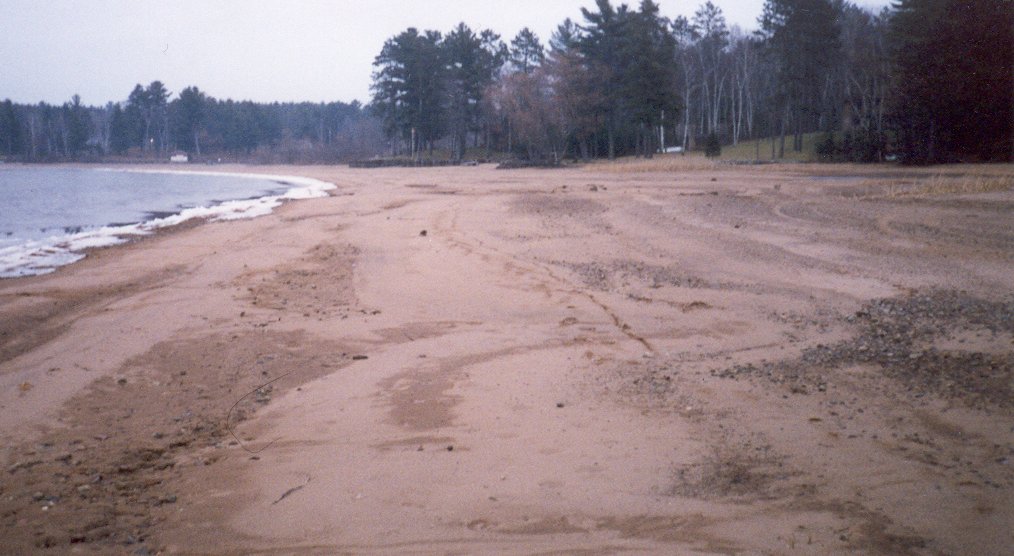
Low water with lots of open ground with the original river course delineated on a flowage in northern Wisconsin.
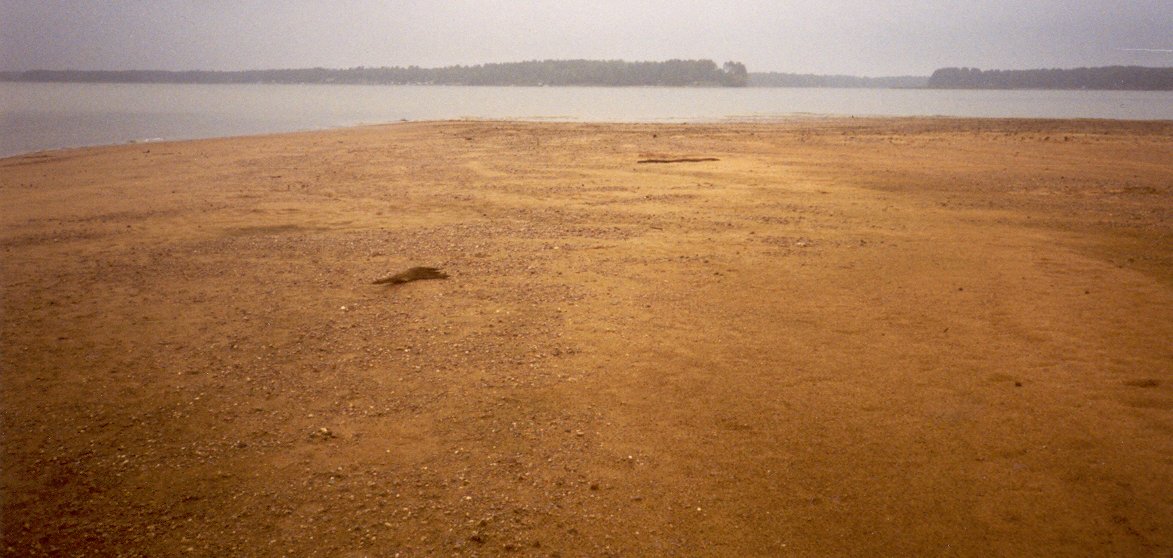
Unfortunately this is how you usually find river and reservoir sites.
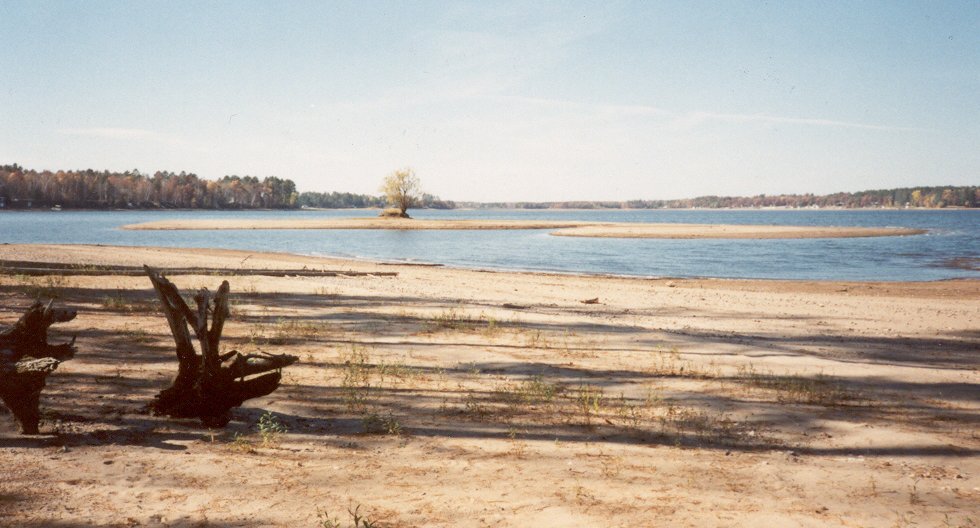
When you check back a few months later you may get lucky and find the same site as above looking like this site.
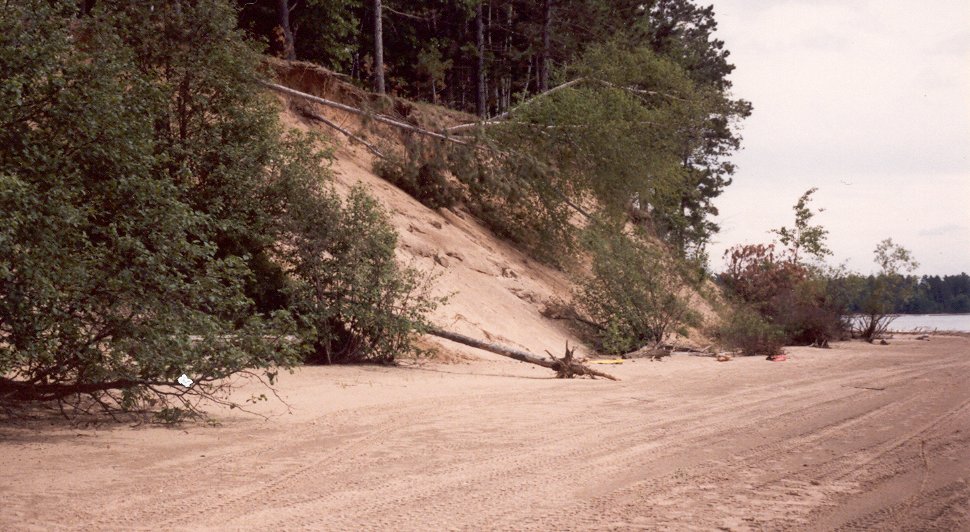
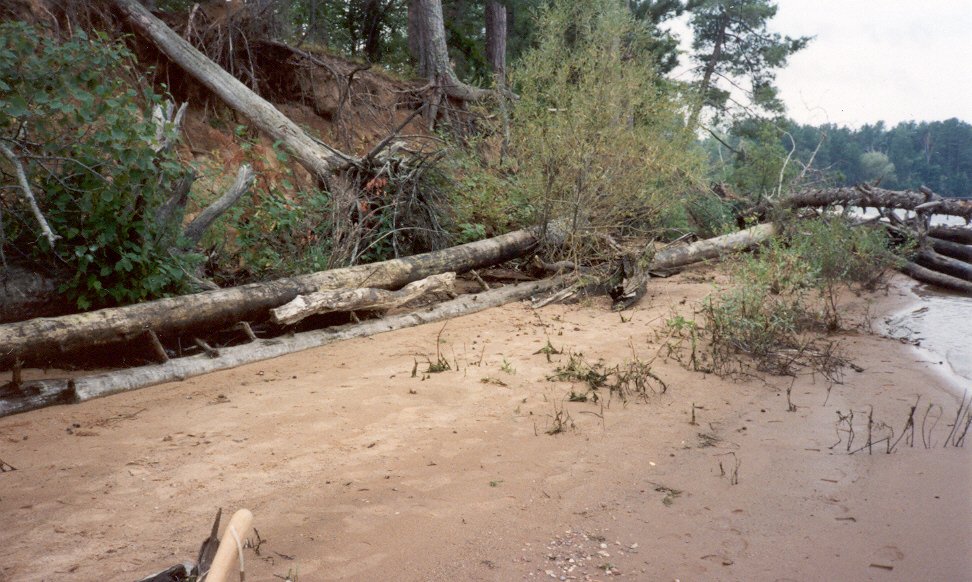
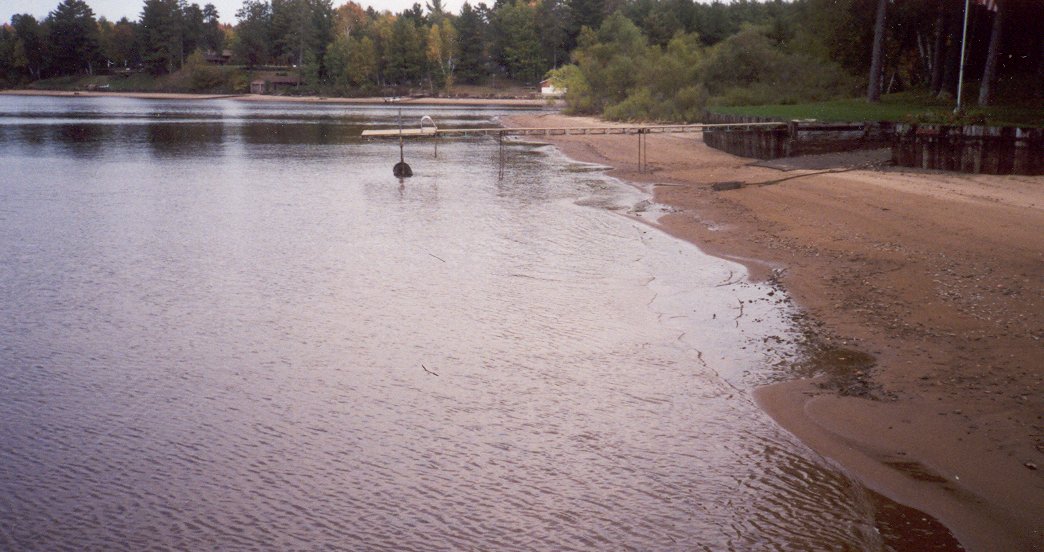
Artifacts wash out of the sandy bank and are found in the sand at low water on the exposed beach.
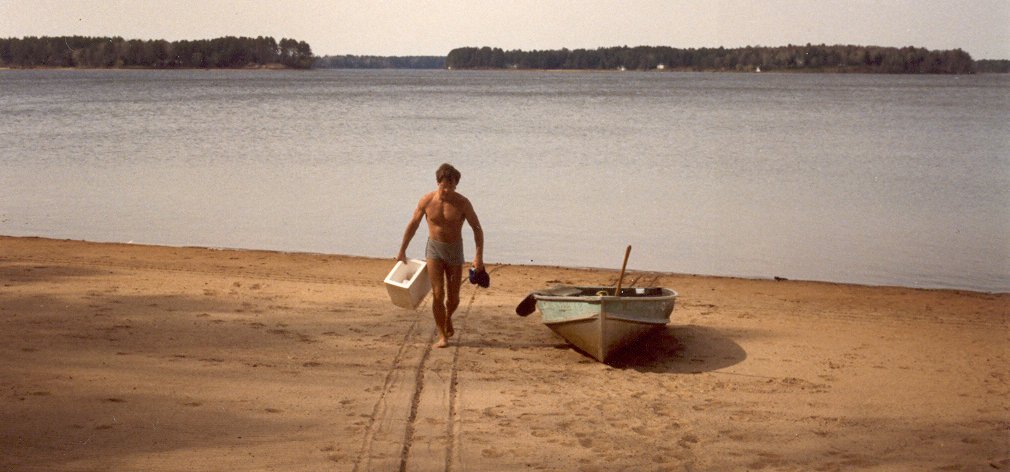
In undeveloped areas the only way to access sites is with a boat or walk through miles of woods, yours truly at a site.
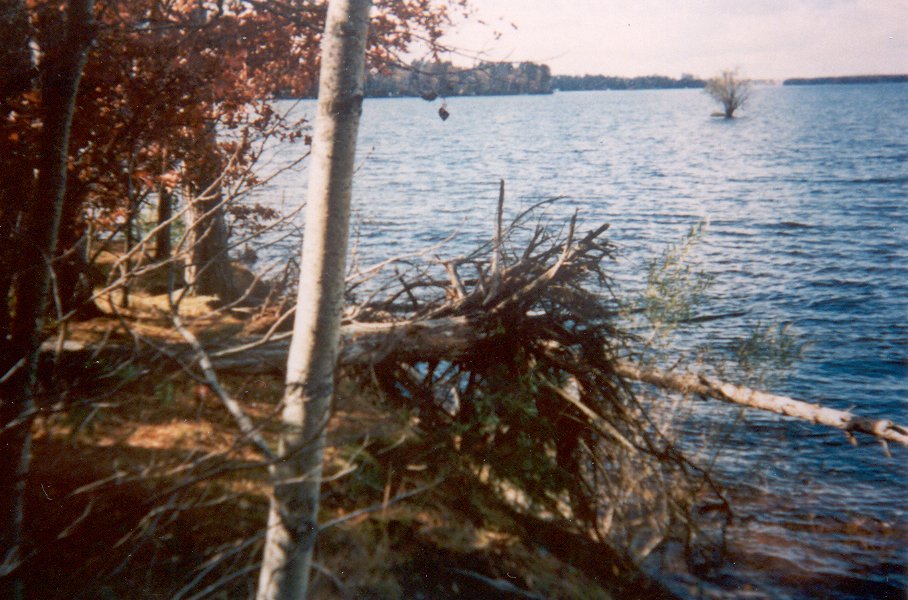
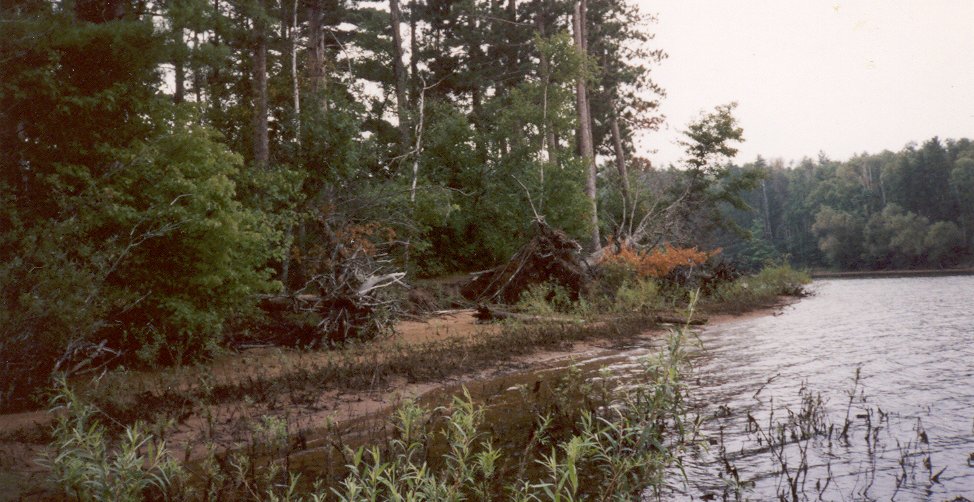
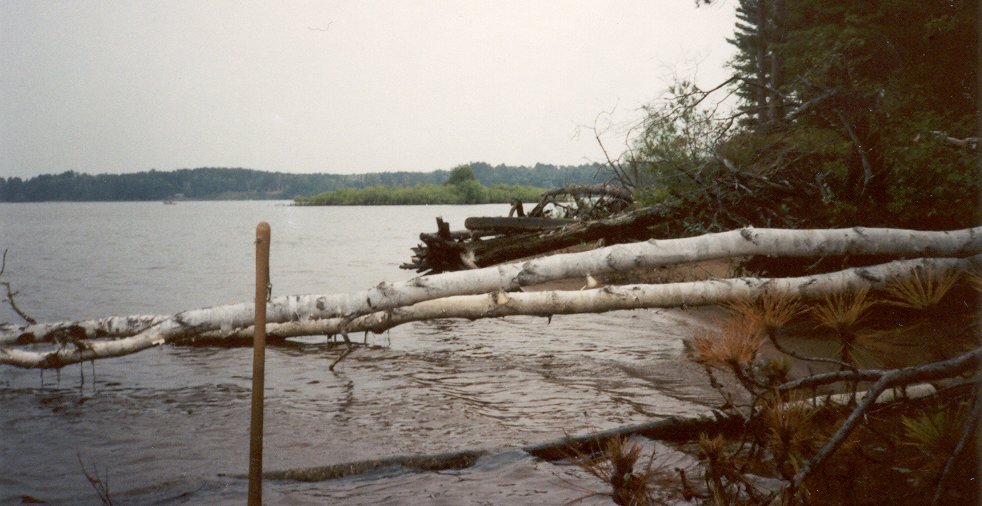
Just as with mineral specimens, a good place to look for copper artifacts is in the roots of uprooted trees such as at the site shown here.
Same site with the water up.
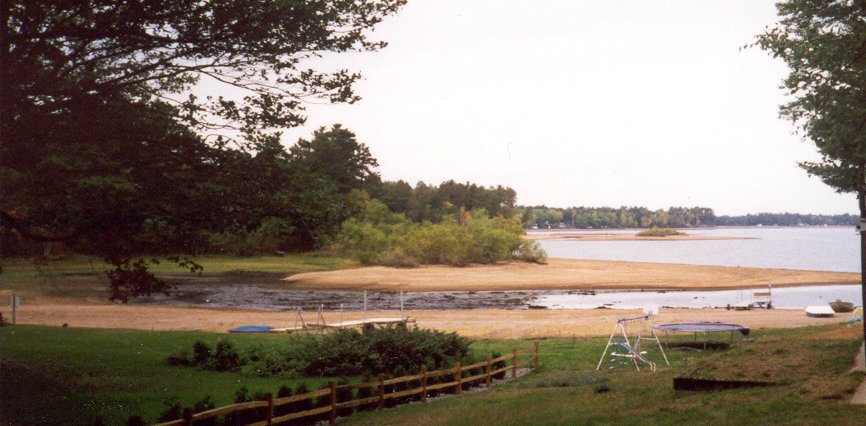
Island Site during high water, during low water you can walk to the island.
Site where all the copper artifacts shown in the case 9 photos above were found.
Site only partially exposed, time to get out the boots or swimsuit and hunt the shallow water.
As the water goes down many small islands have exposed areas that can be hunted.
The first site we worked more than 35 years ago and still producing artifacts.
When the water is this low you hunt artifacts no matter what the weather is like, overcast and raining like this makes little difference, you hunt while you can because the water will not stay low.
The Wisconsin DNR requires a State issued permit to use metal detectors on state owned land or water. You can only use a metal detector to find "lost" items that are specified on the permit application. and cannot remove anything more than 50 years old. Below are the conditions of the permit. If you are found with artifacts on State land they will be confiscated, along with your detector.
Permit Conditions
1. Metal detectors may be used on Department of Natural Resources land or waters only for locating specific lost personal items, which
must be described in the permit application.
2. A metal detector permit is issued only to a specific individual or their designee for the recovery of said personal items.
3. The permit will specify both a reasonably limited search area within the DNR-managed property and a limited time period between May
1 and October 15 (from either 7:00 a.m. until 10:00 a.m. or from 6:00 p.m. until 9:00 p.m.) when the detector may be used.
4. Any proposed metal detecting within recorded archaeological or historic sites requires prior review and approval by the Departmental
Archaeologist.
5. Any recovered item(s) must be presented and reported to the property office for comparison with the permitted recovery description.
The Property Office will retain all recovered items not belonging to the permittee.
6. Archaeological and historic materials (i.e., all those 50 years old and older) may not be removed from their locations.
7. All excavations must be returned to their original conditions.
8. The Property Manager or authorized Department of Natural Resources representative may terminate this permit by verbal notification at any time.
9. The Permittee agrees to reimburse the Department of Natural Resources for any damages to State property resulting from the
Permittee's actions or omissions. The Permittee is subject to all rules and laws regulating conduct on State property.
10. Additional restrictions and description of specific lost personal item(s):
The DNR has now made it virtually impossible to legally search for artifacts on State land. This makes artifact hunting on private property the only alternative left to artifact collectors, this was not the case when we began hunting artifacts but it is a fact of life today for metal detectorists. The DNR folks sitting in their cubicles in Madison seem to think that artifacts are better left in the ground where no one will ever know they exist, rather than being recovered, recorded and studied.
Artifact hunting is like other outdoor hobbies, do it responsibly. Never disturb Native American burials, if these are are going to be disturbed, these should be left to archeologists to excavate properly. Ask for permission before hunting on private property. Leave the area you have hunted so no one can tell you have been there, if you dig a hole fill it in before you leave, don't leave trash behind. Do these things and you will be welcomed back again.
If you decide to go artifact hunting remember that you can expect to look for a long time before you find that first artifact. Unless you do some research before going you will most likely be disappointed with your results. Expect to dig a lot of holes and turn up pull tabs, bottle tops, aluminum cans, lead sinkers, metal fishing lures, and scrap metal of all kinds. Some areas in northern Wisconsin have a great deal of magnetite which can drive you crazy. The new higher end detectors have the ability to discriminate between metals and can save a great deal of digging and frustration once you learn how to use them.
Good Luck!
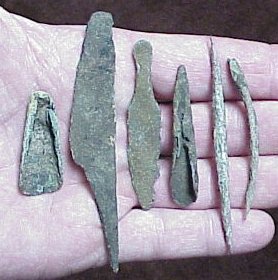
The results of a successful artifact hunt.

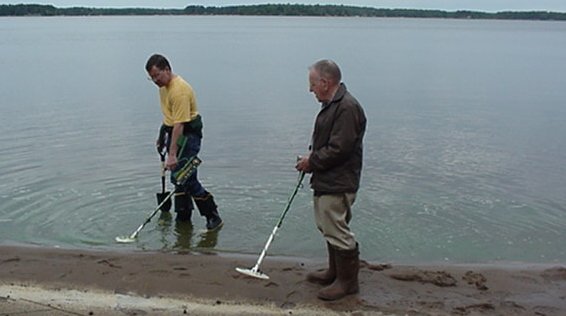
My father and me artifact hunting before a State issued permit to use metal detectors on state owned land or water was required.
Artifact Collecting
